Introduction
Perfect binding is a bookbinding method that uses adhesive to attach pages to a flat, squared-off spine and cover. No staples, no wire loops — just glue and pressure.
If you're a magazine publisher, association, or business producing a recurring publication, binding choice is a real production decision. Binding choice affects durability, shelf appearance, and how long your magazine survives repeated handling.
Here's the problem: printers throw around "perfect binding" like everyone already knows what it means. Many clients nod along, then get surprised later by minimum page counts (often 40+ pages), adhesive options, or spine design constraints they didn't see coming.
This guide covers how perfect binding works, why magazines favor it, which specs change the result, and when saddle stitching or another method is the better call.
Key Takeaways
- Perfect binding uses adhesive, not staples, for a flat, printable spine
- Best suited for magazines with higher page counts (typically 64+ pages)
- Spine prep and adhesive (hot melt or PUR) determine strength before the cover is attached and trimmed
- Paper weight and adhesive type directly affect how long the binding holds up
- Choose saddle stitching or Wire-O for thinner issues or publications that must lay flat
What Is Perfect Binding and Why Do Magazines Use It?
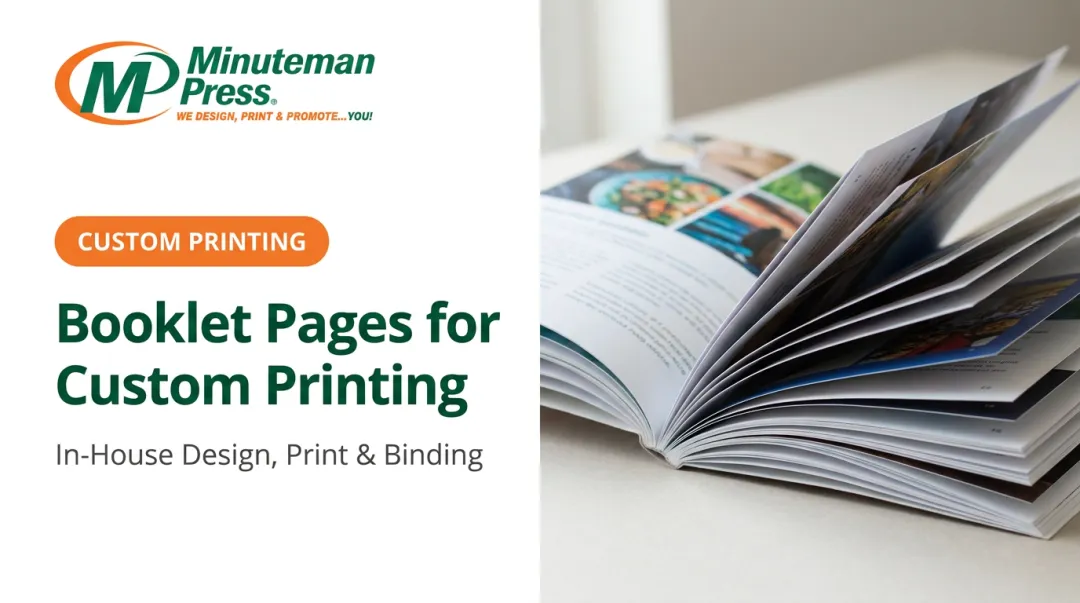
Perfect binding glues gathered pages to a cover along a roughened spine edge, creating a flat, rectangular spine rather than a folded one. The finished result stands upright on a shelf, with the title visible from the side, much like a paperback book.
Compare that to the alternatives:
- Saddle stitching: Folds and staples pages through the spine; quick and economical, but best for thinner publications
- Wire-O binding: Metal wire loops through punched holes so pages lay completely flat
- Spiral/coil binding: Plastic or metal coil through the spine; durable for manuals, less common for retail magazines
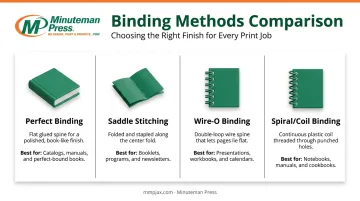
Perfect binding fits a different job: thicker magazines and catalogs (annual issues, premium editions) where the cover and spine need to signal quality before anyone opens the issue.
Why Magazines Choose Perfect Binding
A few practical reasons drive the choice:
- Page count: Saddle stitching thick blocks causes bulging, and staples rarely hold a fat spine evenly
- Spine printing: A flat spine carries title, issue date, and logo—visibility that matters on a newsstand or in a waiting-room stack
- Durability: Repeated handling loosens staples; in humid or long-term storage, metal can corrode and shorten shelf life
UK fashion title Grazia switched to perfect binding to "elevate the brand", aiming for a more premium look and a stronger advertising environment. The shift was as much about brand perception as page count.
If your magazine needs to stand on a shelf and present well, match binding to page count, durability, and how the cover should read at a glance. Minuteman Press works through that assessment with clients rather than assuming one method fits every job.
How the Perfect Binding Process Works
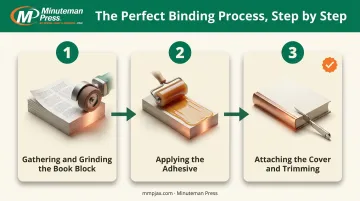
The process follows a clear sequence. Printed signatures are gathered, the spine edge is ground down, adhesive goes on, a cover wraps around the glued spine, and the piece is trimmed to final size.
Materials include:
- Printed interior pages (signatures), typically 60# to 100# text stock
- Heavier cover stock, often 80# to 100#, sometimes with a coating
- Adhesive — usually hot melt (EVA) or PUR glue
Glue temperature, application thickness, and pressing time all shape how strong and flexible the final bond turns out. Get any of those wrong, and pages separate or the spine cracks when opened.
Step 1: Gathering and Grinding the Book Block
Operators collate the pages and clamp them tightly, then grind or mill the spine edge slightly. That roughens the edge and exposes fresh paper fibers so the adhesive has something to grip. Skip this step, or do it unevenly, and pages loosen at the spine much faster.
Step 2: Applying the Adhesive
The binder applies glue evenly across the roughened spine. Adhesive choice matters here:
- EVA hot melt cures fast, costs less, and works fine for shorter-life publications
- PUR glue bonds better to coated stocks, stays flexible longer, and holds up better under repeated flexing — the stronger pick for magazines built to last
Step 3: Attaching the Cover and Trimming
The cover wraps around the glued spine and presses firmly into place while the adhesive sets. Once bonded, the binder trims the piece on three sides for a clean, finished edge. Loose sheets become a single, flat-spined unit ready to ship.
Where Perfect Binding Fits in Magazine Production and What Affects It
Perfect binding happens during the bindery or finishing stage, after printing and folding and right before final trimming and shipping. The method depends on production choices made earlier in the process, not design alone.
Typical triggers for choosing this method:
- Page count climbing past roughly 64 pages
- A need for a premium, book-like presentation (city magazines, member publications, or catalogs)
- A recurring periodical with consistent thickness from issue to issue
Special anniversary or collector's editions sometimes use perfect binding as a one-time upgrade, even if the regular issues are saddle stitched. That's a legitimate reason to switch methods for a single run.
Factors that affect the final outcome:
- Paper and cover stock weight : heavier stock holds a bond differently than lightweight sheets
- Adhesive type and temperature : affects flexibility and how long the spine holds up
- Equipment capability : every binding machine has a minimum and maximum spine-thickness range it can process
- Print run size : short runs and high-volume jobs move through production differently, affecting cost and turnaround
- Design near the spine : critical text or images placed too close to the spine risk getting trimmed off in the grind-off area
That last point trips up a lot of first-time magazine designers. Leave margin near the spine, or important content disappears during binding.
Common Issues, Misconceptions, and When Perfect Binding Isn't the Right Choice
A few misunderstandings come up again and again with perfect binding. Worth clearing them up before you commit to a method.
"Perfect" doesn't mean flawless. The name refers to the trimmed, squared spine — not a guarantee of superior quality. A poorly executed perfect bind can fail just as easily as a poorly stapled magazine.
Not all glue performs the same. Adhesive choice significantly changes how long a magazine holds together under repeated handling. Cheap hot melt on a coated cover stock is a common failure point.
Thin magazines struggle with this method. Very thin publications, generally under a couple of millimeters of spine thickness, often don't hold well. There's not enough surface area for the adhesive to grip properly, and pages can separate.
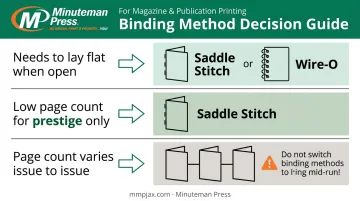
When alternatives make more sense:
- Recipe magazines or manuals that need to lay flat while open — saddle stitch or Wire-O binding perform better here
- Short, low-page-count publications where perfect binding gets chosen purely for prestige — saddle stitching often does the same job for less money
- Publications with page counts that change from issue to issue — switching binding methods each time adds unnecessary cost
If your magazine's page count doesn't clearly call for perfect binding, don't force it. Minuteman Press Jacksonville also handles saddle stitching and Wire-O binding in-house, so there's flexibility to match the method to the actual publication rather than a default choice.
Conclusion
Perfect binding creates a durable, professional, book-like spine by grinding the spine edge, gluing gathered pages, and pressing on a cover. Knowing how grinding, gluing, and trimming work helps publishers match the method to page count, budget, and how readers will actually use the magazine.
The real mistake is choosing perfect binding by default for appearance alone, without checking whether it fits the job. Minuteman Press's Jacksonville team can walk through page count, paper stock, and turnaround needs to recommend the right binding solution for your specific magazine project.
Frequently Asked Questions
What is perfect binding for a magazine?
Perfect binding is an adhesive-based method that glues gathered pages and a cover together along a flat, squared spine. It's commonly used for magazines with higher page counts that need a book-like, shelf-ready appearance.
How much does perfect binding cost?
Cost depends on page count, paper stock, print run size, and adhesive type. It's more expensive than saddle stitching, so request a custom quote for accurate pricing on your project.
What is the difference between perfect binding and saddle stitching?
Perfect binding uses glue for a flat spine and suits thicker magazines. Saddle stitching uses staples along a folded spine and works better for thinner publications that need to lay flat.
How many pages does a magazine need for perfect binding?
Perfect binding works best around 64 pages or more. Some binderies can handle thinner spines depending on paper weight and equipment.
How long does a perfect bound magazine last?
With quality adhesive like PUR glue and appropriate paper stock, perfect bound magazines can hold up for years without loosening. Staples, by contrast, can corrode or come undone over time.
Can a perfect bound magazine lay flat when opened?
Not fully, especially when new. The spine tends to resist lying completely flat, though it loosens somewhat with repeated use over time.
Visit Us in Jacksonville
Minuteman Press Jacksonville handles perfect binding, saddle stitching, and Wire-O binding in-house, and can walk through page count, paper stock, and adhesive options to match the binding method to your specific publication. Call 904-733-5578 or visit 4185 Sunbeam Road, Suite 100, Jacksonville, Florida 32257 to discuss your magazine or catalog project.